



Wheel Fitment Guide
When it comes to wheels, there is a lot of information out there. Rather than dig too deeply we’re just going to provide a high-level overview of the important basics, ultimately wheel decisions come down to aesthetics as much as performance. Overall diameter, and the smallest size you can fit, is generally determined by clearance with brake calipers and steering knuckles. Width determines how much space the wheel takes up inside the wheel well and how far out it will stick past the body line; it also determines the tires inflated profile, and what tire widths are suitable. Most of the wheels we sell land within the 8.5-9.5" range and will work with tires anywhere from 10-13" in width. Always follow the tire manufacturer recommendations for approved wheel widths.
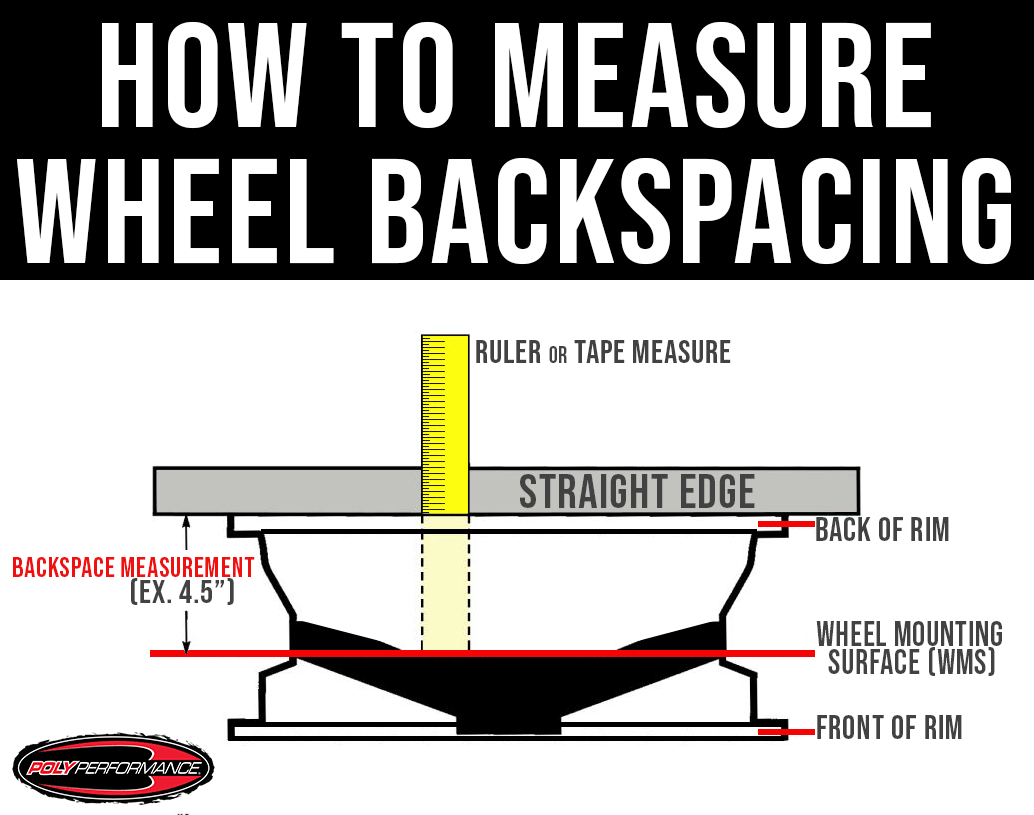
The third metric of importance is where the wheel mounting surface sits inside the wheel’s shell. There are two ways to measure the location of the wheel mounting surface: backspacing and offset. Backspacing is easier to understand, as it is simply how far the wheel mounting flange is spaced back from the inside lip of the wheel. Offset is less commonly used in the 4wd industry as it is measured in relation to the center of the wheel, out or inward, in mm. It doesn’t change relative to the overall width of the wheel, and doesn’t give as clear of a picture with regards to inboard component clearance. Both metrics tell essentially the same thing but in different languages; we prefer to use backspacing to determine fitment as it is relative to the width of a wheel and how the majority of our suspension manufacturers spec for clearance and interference.
Since our goal is usually to fit the biggest tires we can for a given height, proper component clearance is critical and necessary when making an informed decision on wheels. Below is a chart of information compiled from our manufacturer’s fitment guides. We hope this will guide you in making the best decision for your new wheels. Our techs are always standing by on phone and email to further answer your questions.
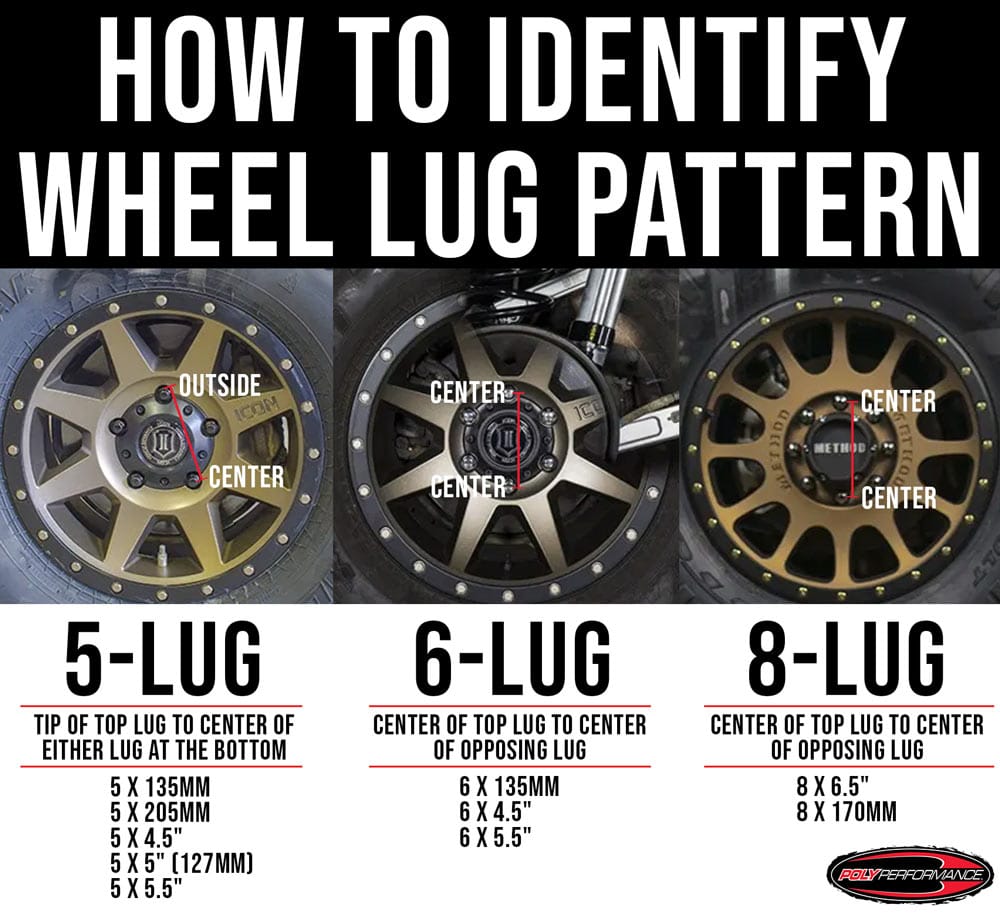
Common Bolt Patterns:
| Make | Model | Bolt Pattern | Minimum Wheel Size | Maximum Back Space |
|---|---|---|---|---|
| GM | 99-06 1500 | 6 x 5.5" | 16" | 5" |
| 07-18 1500 | 6 x 5.5" | 17" | 5" | |
| 19+ 1500 | 6 x 5.5" | 17" | 4.75" | |
| 01-10 HD Pickups | 8 x 6.5" | 16" | 5" | |
| 11+ HD Pickups | 8 x 180 mm | 17" | 5.5" | |
| Colorado / Canyon | 6 x 120 mm | 17" | 5.25" | |
| RAM | 09-18 RAM 1500 | 5 x 5.5" | 17" | 5" |
| 19+ RAM 1500 | 6 x 5.5" | 18" | 5" | |
| 94-13 RAM HD | 8 x 6.5" | 17" | 5.75" | |
| 13+ RAM 3500, 14+ RAM 2500 | 8 x 6.5" | 17" | 5.75" | |
| Ford | 04+ F150 | 6 x 135 mm | 17" | 5" |
| 10-14 Raptor | 6 x 135 mm | 17" | 5" | |
| 17+ Raptor | 6 x 135 mm | 17" | 5" | |
| 19+ Ranger | 6 x 5.5" | 17" | 5.75" | |
| 05-16 Super Duty | 8 x 170 mm | 17" | 5" | |
| 17+ Super Duty | 8 x 170 mm | 17" | 5" | |
| Jeep | TJ/LJ | 5 x 4.5" | 15" | 3.75" |
| JK | 5 x 5" | 17" | 4.75" | |
| JL Wrangler | 5 x 5" | 17" | 4.75" | |
| JT Gladiator | 5 x 5" | 17" | 4.75" | |
| Toyota | 96-04 Tacoma | 6 x 5.5" | 16" | 4.75" |
| 05+ Tacoma | 6 x 5.5" | 16" | 4.75" | |
| 96-02 4Runner | 6 x 5.5" | 16" | 4.75" | |
| 03+ 4Runner | 6 x 5.5" | 17" | 4.75" | |
| 07-14 FJCruiser | 6 x 5.5" | 17" | 4.75" | |
| 07-21 Tundra | 5 x 150 mm | 17" | 5.75" | |
| 22+ Tundra | 6 x 5.5" | 17" | 5.75" |
| Standard Bolt Pattern | Metric Equivalent |
|---|---|
| 5 x 4.5" | 5 x 114.3 mm |
| 5 x 5" | 5 x 127 mm |
| 6 x 5.5" | 6 x 139.7 mm |
| 8 x 6.5" | 8 x 165.1 mm |